Jeanne Lanvin and the art of couture embroidery

The Lanvin logo shows a mother and a little girl holding hands, as if about to dance. It is one of the most tender images in fashion, and it hides a story about embroidery.
From milliner to couturier
Jeanne Lanvin was born in Paris in 1867, the eldest of eleven children. She started work at thirteen, and in 1889 opened her own shop on the rue du Faubourg Saint-Honoré, the street where the house of Lanvin still stands.

Then came Marguerite
Her daughter Marguerite was born in 1897. Jeanne made the little girl's clothes herself, and wealthy mothers began asking for copies. Children's clothes led to clothes for their mothers, and in 1909 Jeanne became a couturier.

A logo that is a love letter
In 1924 the illustrator Paul Iribe drew the logo from a 1907 photograph of mother and daughter at a costume party. In 1927 Jeanne launched the perfume Arpège for Marguerite's thirtieth birthday, a tribute to her talent at the piano.

Lanvin blue
Jeanne also had a colour: a deep, soft blue linked to the frescoes of Fra Angelico. In 1923 she opened her own dye works at Nanterre, so no other house could match her shades.


Embroidery under one roof
While many couture houses sent their embroidery out, Jeanne Lanvin kept it in-house. According to the Palais Galliera, the Paris fashion museum, Lanvin had three embroidery workshops of its own.

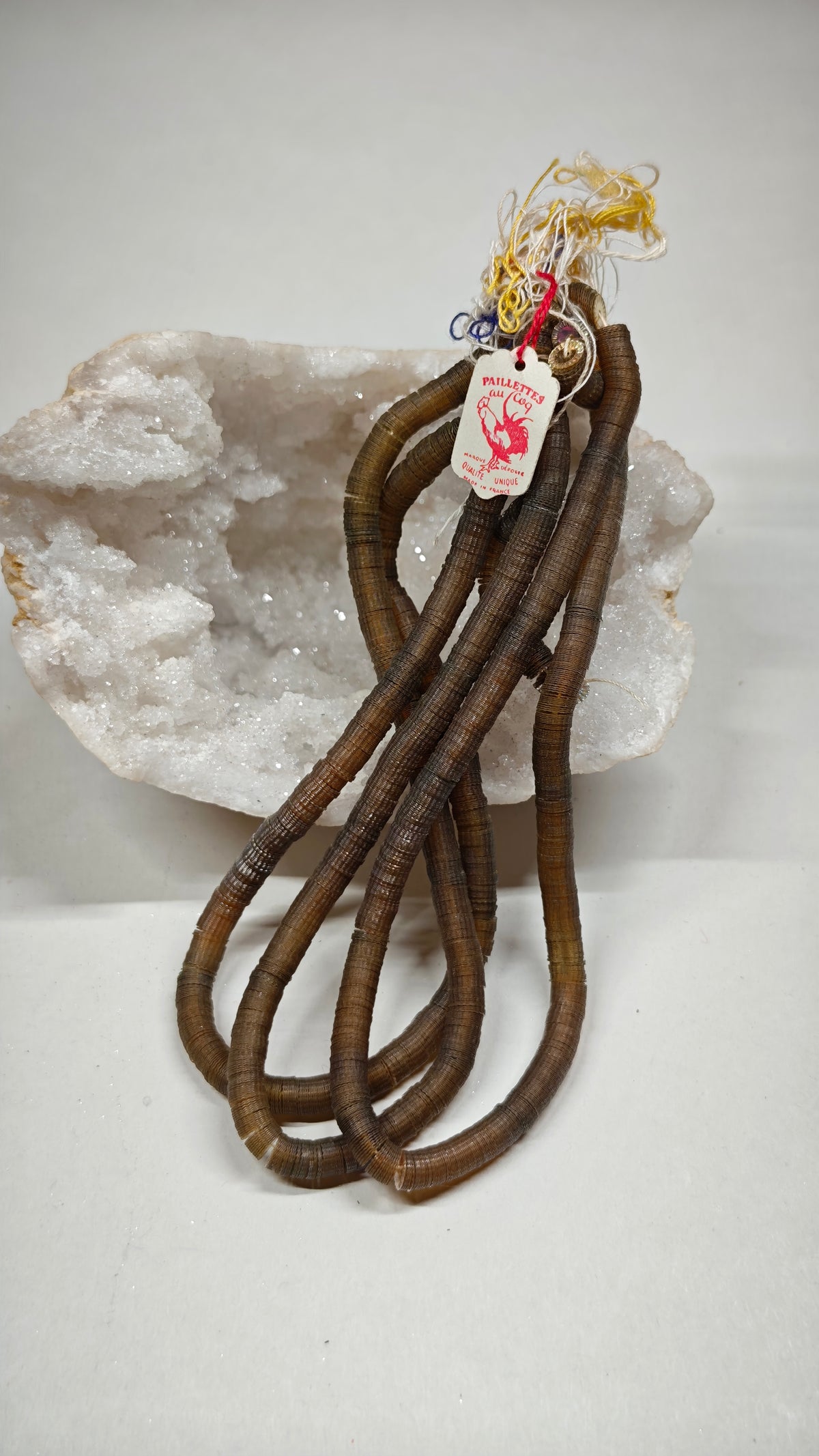
Their materials read like a jewellery box: glass beads, pearls, crystals, and layers of silvered and gilded sequins, a hallmark of the house. Look closely at the dresses that survive in museums today and you can still follow every bead.


The robe de style
The dress that carried all this work was the robe de style: a small waist and a wide skirt, trimmed with ribbons and rosettes or covered in beads. In October 1924, Vogue called it "the Lanvin dress".

Paris actresses wore Lanvin on stage and in their portraits. Here is Marguerite Valmont in three Lanvin dresses, one with a skirt of black lace, two with shimmering lamé bands.

By hand, with a tiny hook
Much of the beading in Paris couture was worked with the Lunéville hook. The fabric is stretched on a frame, the beads are threaded underneath, and the embroiderer works from the back, sliding one bead or sequin up with each chain stitch. It is fast, rhythmic and a little magical, and it is the technique I teach today.

If you could own one Lanvin dress, which would it be?
Start stitching
The easiest way to begin is the Atelier Box, with the hook, a frame and step by step lessons for complete beginners. For vintage materials, browse the Norman Hartnell Archive and Collector's Pieces.