
The Atelier Box

The Atelier Box
Hurry, only 10 items left in stock!
Everything to begin Lunéville embroidery: the tools, practice materials, three design patterns, the online course and my support.
Lunéville embroidery is worked with a fine hook. You make a chain stitch from the back of the fabric, and the sequins and beads appear on the front in neat, fluid lines. This box lets you learn it at home, at your own pace.
Made for complete beginners. Ships from London.
The Atelier Box
Inside the box
Easy-clip mini frame · 9 × 9 in
With cotton tapes and a table clamp. Made in England.
Silk organza
Pure silk, a classic ground for Lunéville embroidery.
Lunéville hook
Wooden holder with a high-quality Schmetz No. 70 needle.
Fil à gant
The French gloving thread used in couture ateliers.
Sequins & beads for practice
Pre-strung: the finest French sequins and Czech beads.
Pins, pliers & pen
Everything else you need, with a heat-erasable pen to trace your design.
Three design patterns
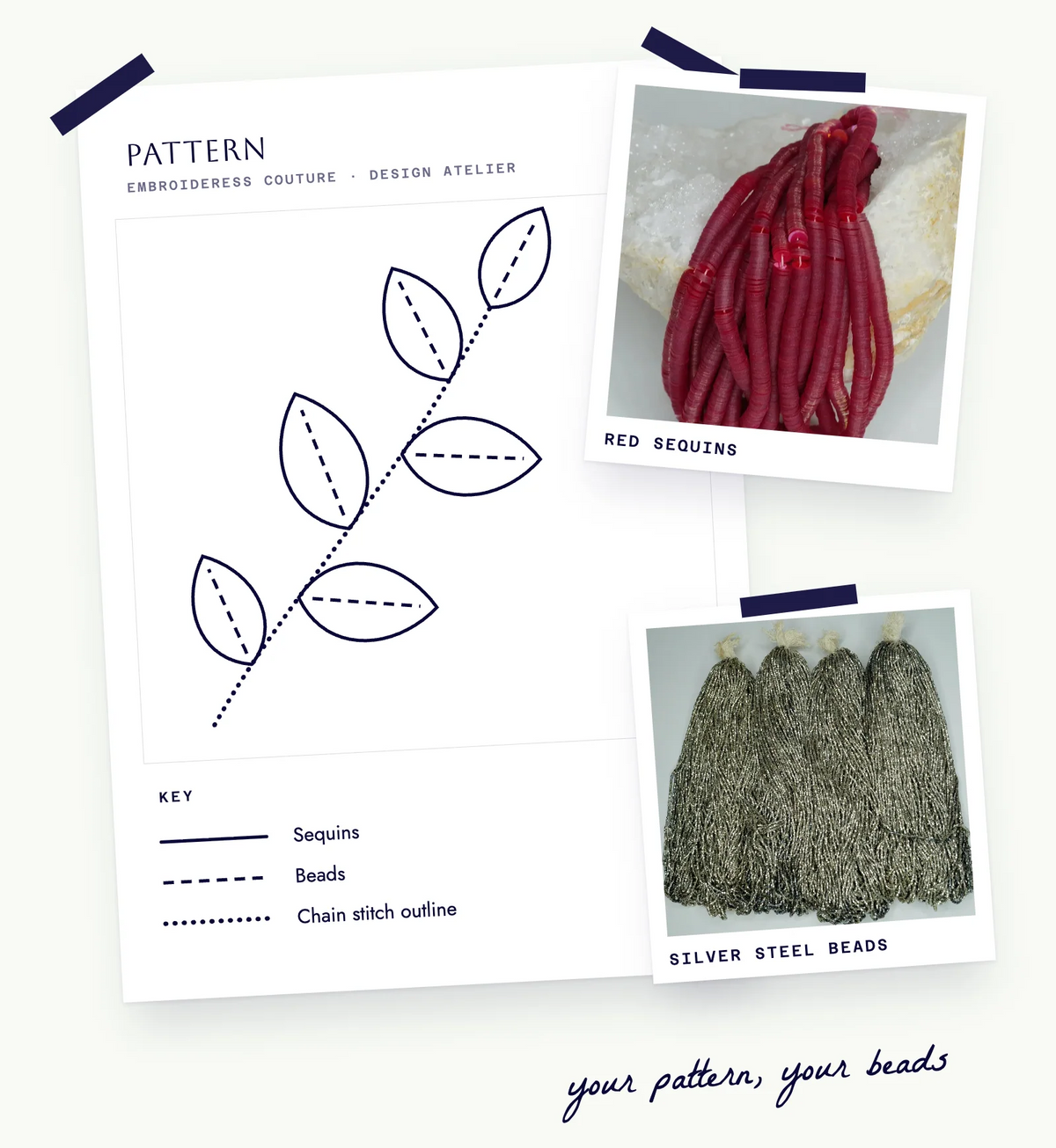
Silver, Red Leaves and Chrysanthemum. Materials sold separately.
The online course
Every technique, step by step, to watch at your pace.
My support on WhatsApp
Send me a photo, I answer you myself.
practise first, then order the materials for your design
How it works
Three steps to your first design
- 1
Learn
Watch the course and set up your frame. Every technique is shown step by step.
- 2
Practise
Work with the pre-strung sequins and beads until the chain stitch feels natural.
- 3
Choose your design
Pick Silver, Red Leaves or Chrysanthemum and order its material pack when you are ready.
The online course
What you’ll learn
Lifetime access. Watch at your own pace, as many times as you like.
- 1
Setting up
Stretching organza on the frame and setting the needle in the hook.
- 2
The chain stitch
Exercises, directions, starting and finishing, turning corners and point tiré.
- 3
Working with materials
Transferring a motif, then adding beads, crystals and sequins.
- 4
Finishing
Correcting mistakes, setting crystals, the zig-zag stitch for appliqué edges, and a whole design from start to end.
I am with you
Three designs
Ready for your first project
The three patterns come in the box. The materials for each design are sold separately, so you can choose the one you love once you feel ready.
practise first, then choose
-
Silver Materials pack · £35.00 -

Red Leaves Materials pack · £35.00 -

Chrysanthemum Materials pack · £35.00


Questions
Before you begin
Is it suitable for complete beginners?
Yes. The box is made for beginners. The course starts from the very beginning, with setting up the frame and holding the hook.
What is Lunéville embroidery?
A couture technique worked with a fine hook. You make a chain stitch from the back of the fabric and feed sequins and beads from underneath, so they appear on the front in neat, fluid lines. It is how the embroidery for haute couture gowns is made.
Are the materials for the designs included?
The box includes the three printed patterns and pre-strung sequins and beads to practise on. The materials for each design come as a separate pack, so you can choose the one you love once you feel ready.
Do I need anything else?
No. Everything is in the box. The frame clamps to any table, so both your hands are free.
What can I make with it?
Start on sheer fabrics: organza, tulle, mesh, or a sheer piece of clothing. As you gain confidence you can embroider almost anything. The course also shows how to finish the edges of an appliqué, so you can sew your motif onto any garment. Advanced embroiderers work by feel on thicker fabrics, or in the Aari style.
How long do I have access to the course?
Forever. Watch it at your own pace, as many times as you like.
I am left-handed. Can I learn?
Yes, of course.
What if I get stuck?
Send me a photo on WhatsApp and I will answer you myself.
Where do you ship?
Everywhere except the EU. Orders ship from London within 2–3 working days.
Can I return it?
Yes. Just get in touch with me.
Can I give it as a gift?
Yes. Add the recipient’s email in the order notes, so I can give them access to the course.
Taxes and duties
Taxes and any import duties are not included in the price. They may be charged by your country’s customs on delivery and are paid by the customer.
The history
Lunéville embroidery
from India to Paris
-

16th century Origins
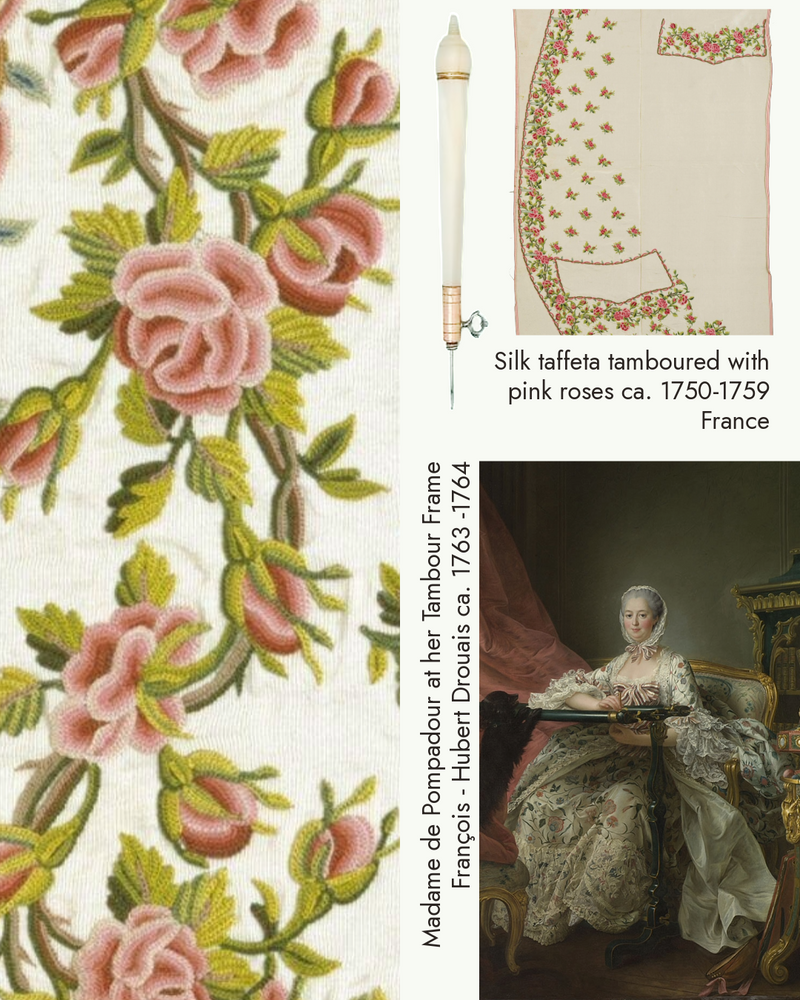
Lunéville embroidery grew from tambour work, which began in India in the 16th century as Aari: continuous chain stitches made with a fine hook on fabric stretched over a drum-like frame. The technique travelled west through Persia and reached Europe in the 18th century.
-
Early–mid 18th century France
Madame de Pompadour embraced the technique and made it fashionable as “point de Pompadour”. Around 1810 it reached Lunéville, where the embroiderers took it up and refined it.
-

1810 – 1865 The Lunéville stitch
Lunéville’s embroiderers worked the hook on cotton tulle, creating delicate white work that looked like fine lace without the labour of lace-making. It became known as Point Lunéville.
-
From 1865 Beads and sequins
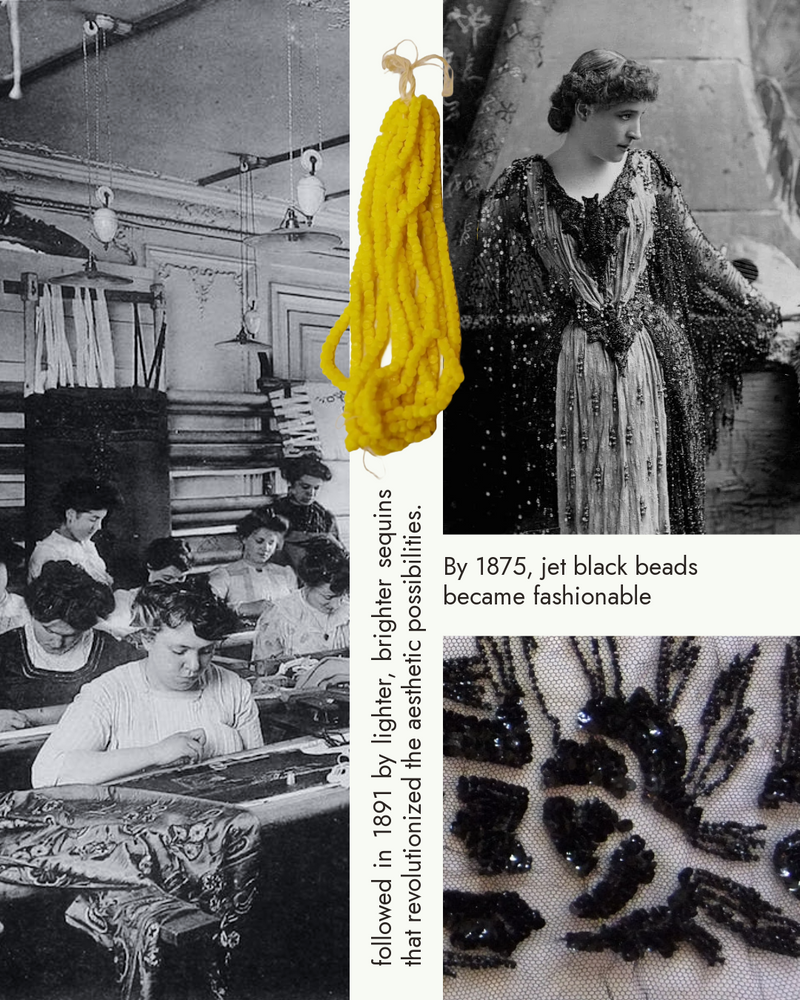
Louis Ferry-Bonnechaux, the mayor of Lunéville, devised a new method: beads and sequins pre-strung on long hanks and caught into the chain stitch from the back of the fabric. This is why they are still sold pre-strung today.
-
Late 19th century onwards Lunéville embroidery today
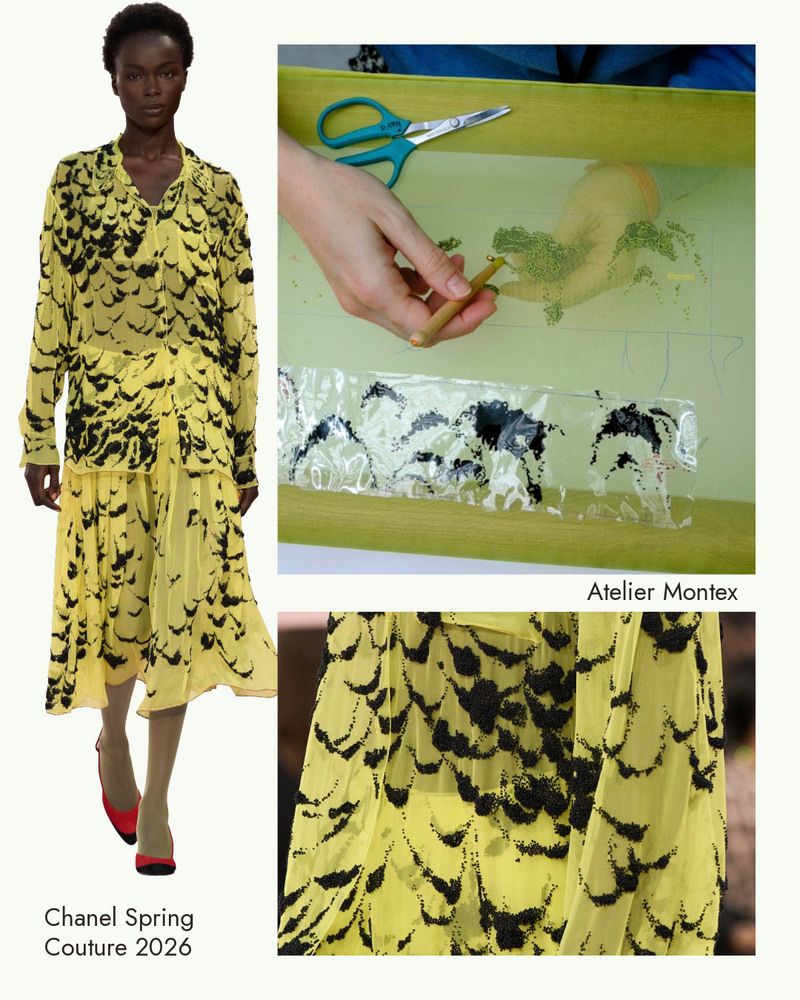
It became a hallmark of French evening wear and reached a peak in the 1920s. From the 1950s it found new life in Paris couture houses such as Dior and Chanel, where the hook and the chain stitch are still essential tools.


Kind words
In their words
thank you
-
The beads themselves are absolutely beautiful. Lovely quality. Fabulous shimmery colours. Great to stitch.
Lesley M.Caviar vintage beads -
What can I say? A piece of history!
Nicola B.Hartnell archive beads -
I can’t fault the service. Everything from timely delivery to the scent emanating from the box.
Bracken H.