

4mm Sphinx Black Cuvettes - Norman Hartnell Archive


4mm Sphinx Black Cuvettes - Norman Hartnell Archive
Only 8 left
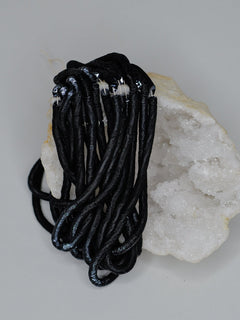
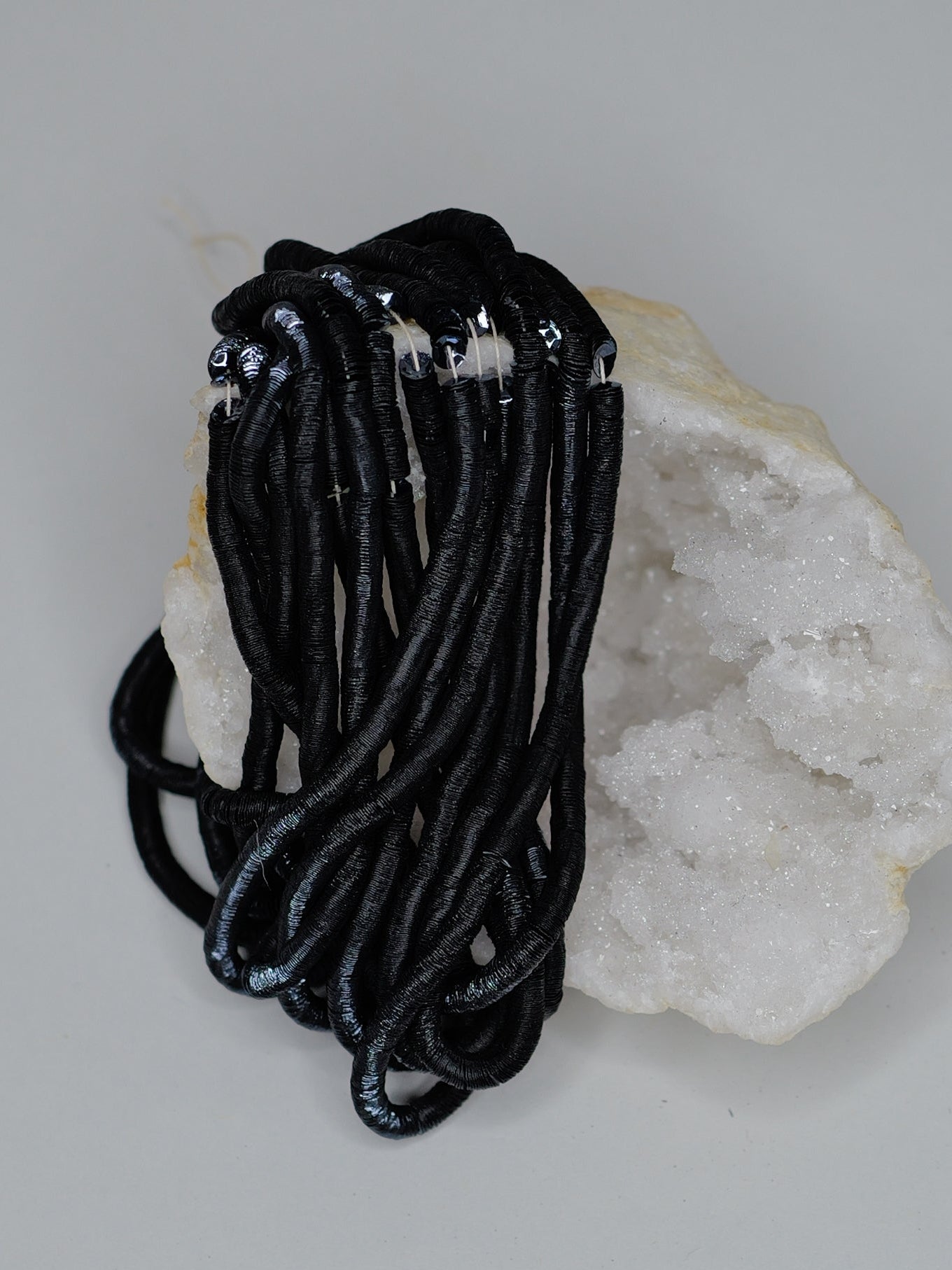
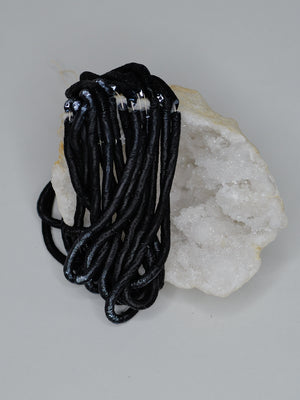
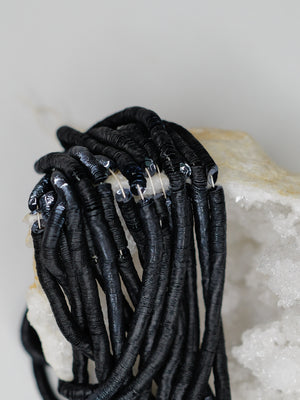
Vintage sphinx black cup sequins (cuvettes), 4mm, from the archive of Mollie Welch, tambour embroiderer in Norman Hartnell’s workroom. Made in Belgium.
Why tagged hanks are rare: in a couture workroom, the embroiderer cut the cord to free the threads, and the little card tag was thrown away. Most hanks were then used up completely. A hank that still has its peacock tag was never opened. The tag is printed in English, “Made in Belgium”, which suggests these were made to be sold in Britain.
1 Hank with peacock tag: a full factory hank with its original card tag, a peacock on one side and “Made in Belgium” on the other. Only one survives in the archive.
1 Hank: a full hank of the same sequins, without the tag.
1 Thread: a single strand from the hank.
About the Archive
This exquisite collection of mid-20th century dressmakers’ beads and sequins originates from the archive of Mollie (Marjorie Constance) Welch, an accomplished embroiderer who worked for Sir Norman Hartnell from 1937 onwards.
Mollie began her career at the prestigious Hartnell couture house on Bruton Street, London, where she contributed to royal and aristocratic gowns embellished with intricate beadwork and embroidery. Her early diary entries mention work on the Queen’s Coronation gowns, including the iconic feather bodice created for Queen Elizabeth (later the Queen Mother) in 1937, and she later assisted with the Coronation ensembles of Queen Elizabeth II in 1953.
After retiring in 1970, Mollie cherished her collection of materials — sequins, beads, and embroidery samples — intending to open her own atelier to teach tambour embroidery. Although fashions changed and her plans never came to fruition, these beautiful embellishments have remained safely preserved for decades.
The set offered here comes directly from the Mollie Welch archive, a tangible link to one of Britain’s most celebrated couture houses and the golden age of royal embroidery under Norman Hartnell.