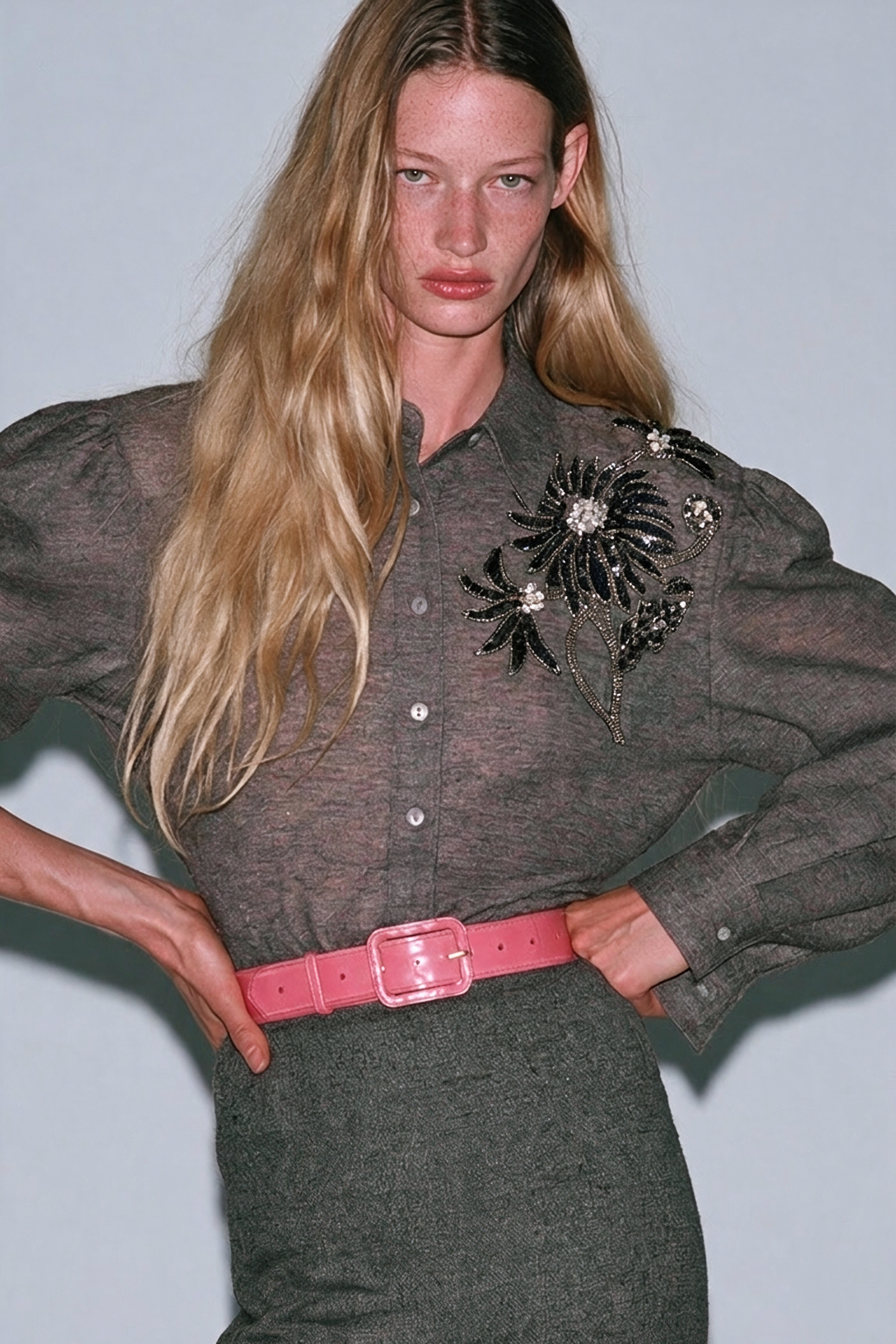
Chrysanthemum Design

Chrysanthemum Design
Complete Box // Tools & Design
Sale price£95.00
Skip to product information
Chrysanthemum Design
1 of 3

Chrysanthemum Design

Sale price £95.00

Hurry, only 3 items left in stock!

// Design Packs // are sold separately now and include the threads, beads, crystals, sequins and pattern for each design. They are created for embroiderers who already know the Lunéville technique.

New to Lunéville embroidery? Add the Atelier Box to learn the technique and master the chain stitch.

// The Atelier Box // is your complete toolkit for starting and practising Lunéville embroidery. Beautifully assembled with the essential tools and materials, it gives you a considered foundation for creating future Design Packs and your own embroidery projects.

Inside your Atelier Box:

Silk organza // Lunéville hook // Easy-clip mini frame, 9 × 9 inches // Cotton tapes // Table clamp // Pins // Pliers // Heat-erasable pen // Step-by-step video guidance to help you get started.


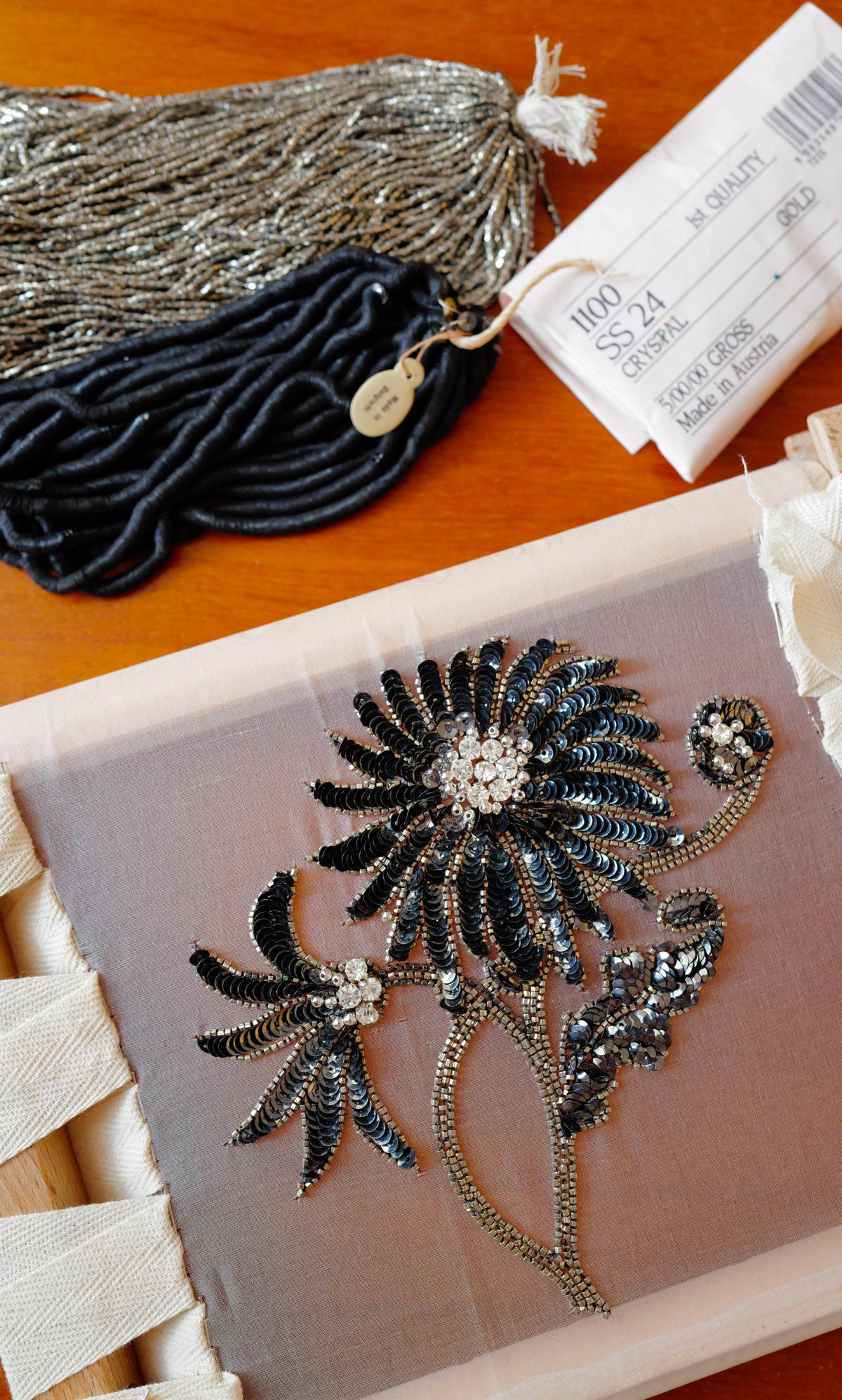
For this design, the materials include vintage sequins made in Belgium by a manufacturer that is no longer in operation, sourced from the Norman Hartnell auction, along with antique beads found at French antique markets.
Items Included: Complete Box // Tools & Design
More to love

Atelier Box Event

Sale price£200.00

FAQs

You have questions, we have answers.

Materials included:

  • 1 × spool of black Fil à Gant thread
  • 1 × hank of antique gunmetal beads
  • 1 × strand of vintage Belgian sequins
  • 1 × piece of silk organza
  • 20 x Swarowski crystals
  • 20 x settings for the crystals

You do not need to buy the Atelier Box. All video tutorials are compatible with the original Initiation Box and Initiation Box 2.0.

Please note that Design Packs are made for a 9 × 9-inch frame, and some projects may require pliers. If your original Initiation Box does not include these tools, you may need to purchase them separately.

Yes. More Design Packs will be released in the future, all based on the same core Lunéville techniques.

Each pack will feature unique vintage materials, carefully sourced to make every project feel special. The purpose is not to teach a completely new technique each time, but to offer a calming, satisfying project—much like cross stitch—where you can enjoy the meditative rhythm of familiar, repetitive movements.

The designs are intentionally achievable rather than overly complex. With Lunéville embroidery, beads and sequins are pre-strung onto the thread before you begin, allowing you to focus on the flowing, repetitive movement of the hook.

In this box you’ll learn the essential foundations of Lunéville embroidery:

- How to create and attach appliqué
- How to set up your frame
- Basic chain stitch with the Lunéville hook
- How to start and finish your thread neatly
- Applying beads using the hook
- Applying sequins using the hook
- Working clean corners
- Pulled stitch
- How to set crystals into their settings

These are the core movements you need to feel confident with the technique and ready to progress to more advanced haute couture pieces.

The Atelier Box is for anyone drawn to Lunéville embroidery but unsure where to begin. It brings together the right tools, beautiful materials and clear guidance, so you can start without the confusion of sourcing everything yourself.

This box is made for you if:

- You admire couture embroidery and would like to try the authentic Lunéville technique.
- You want everything in one place before deciding whether this craft is for you.
- You feel overwhelmed by conflicting advice and tutorials online.
- You have tried to begin on your own but found the fabric, tools or instructions confusing.
- You value carefully selected, beautiful materials rather than guessing what to buy.
- You would appreciate WhatsApp support from your teacher when questions arise.
- You want a calm creative ritual: setting aside your phone for 20–40 minutes, repeating the gentle motion of stitching, and watching a small design slowly take shape.

It is less about perfection and more about slowing down, breathing and enjoying the process.

FAQs

More question

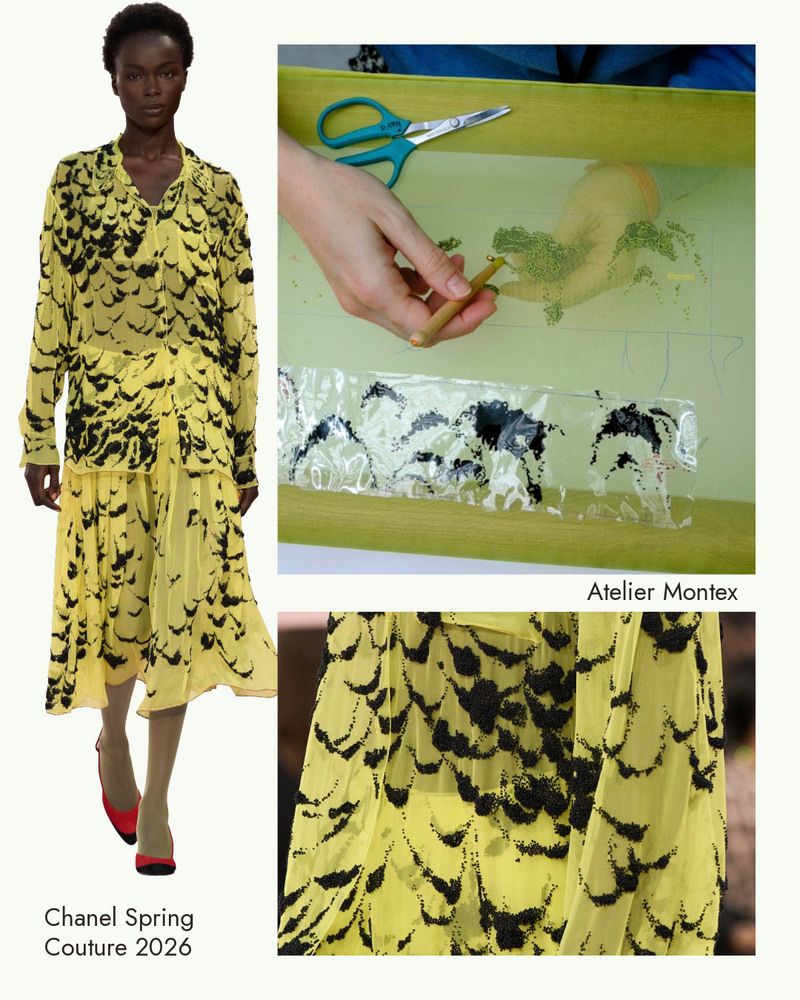
Lunéville embroidery is a hook-based beading and stitching technique used in haute couture to create very fine, fluid embroidery, often enriched with beads and sequins. The chain stitch — the only stitch used — is formed with a specialized hook that has a sharp needle-like tip attached to a wooden or ivory handle with metal components and a clamping screw for precise positioning. A characteristic feature of the method is that the embroiderer works from the reverse side of the fabric while feeding beads and sequins from underneath, so that only neat rows of chain stitches are visible on the front.

Once you’re fluent, the hook allows much faster application of beads and sequins than needle methods, with long, uninterrupted lines and very fluid curves - one reason it’s so used in haute couture.

Lunéville: excellent for large surfaces of couture beading — gowns, bodices, veils — where speed, lightness and fluidity are critical.

Needle: better when you want mixed stitch textures, more relief, or very pictorial / illustrative work, but tends to be slower for dense beading.

Outside the UK taxes and any applicable import duties are not included in the product price.

16th century

Origins and Early Development

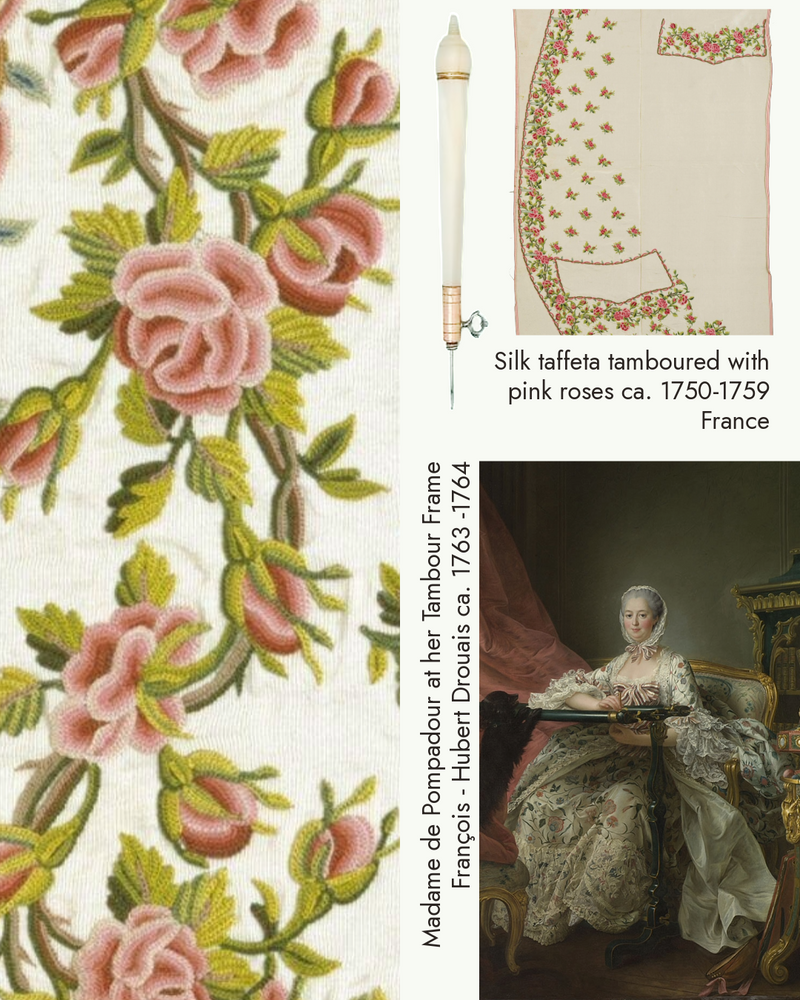
Lunéville embroidery has its deep roots in older Asian chain-stitch traditions. Tambour embroidery, the foundational technique, originated in India in the 16th century, where it is known as Aari work. Using a fine hook with a wooden handle, embroiderers formed continuous chain stitches on fabric stretched tightly over a drum-like frame—hence the French word tambour, meaning “drum.” Over time, this hooked chain-stitch method travelled westward through Persia and into Europe, arriving in the 18th century via trade with India and China, where it quickly became a coveted luxury craft among the aristocracy.
Early-mid 18th century

France

In France, tambour embroidery became fashionable in the early 18th century when Madame de Pompadour, the official mistress of Louis XV, embraced the technique and helped popularize it under the name “point de Pompadour.” As tambour work spread beyond the royal court, it eventually reached Lunéville around 1810, where embroiderers—active in the region since the late 17th century—quickly adopted and refined it. Long associated with the Dukes of Lorraine and their taste for luxury textiles, Lunéville was the perfect environment for this technique to grow into a distinctive local specialty.
1810 – 1865

The Lunéville Stitch

Around 1810, Lunéville’s embroiderers adapted the tambour technique to cotton tulle, creating delicate white work that closely mimicked fine lace without the exhausting labor of traditional lace-making. This innovation, soon known as Point Lunéville, preserved the airy, ethereal look of handmade lace while keeping the embroidery light and almost weightless on the fabric, helping Lunéville work evolve into an internationally coveted symbol of French luxury.
From 1865

Revolutionary Innovation

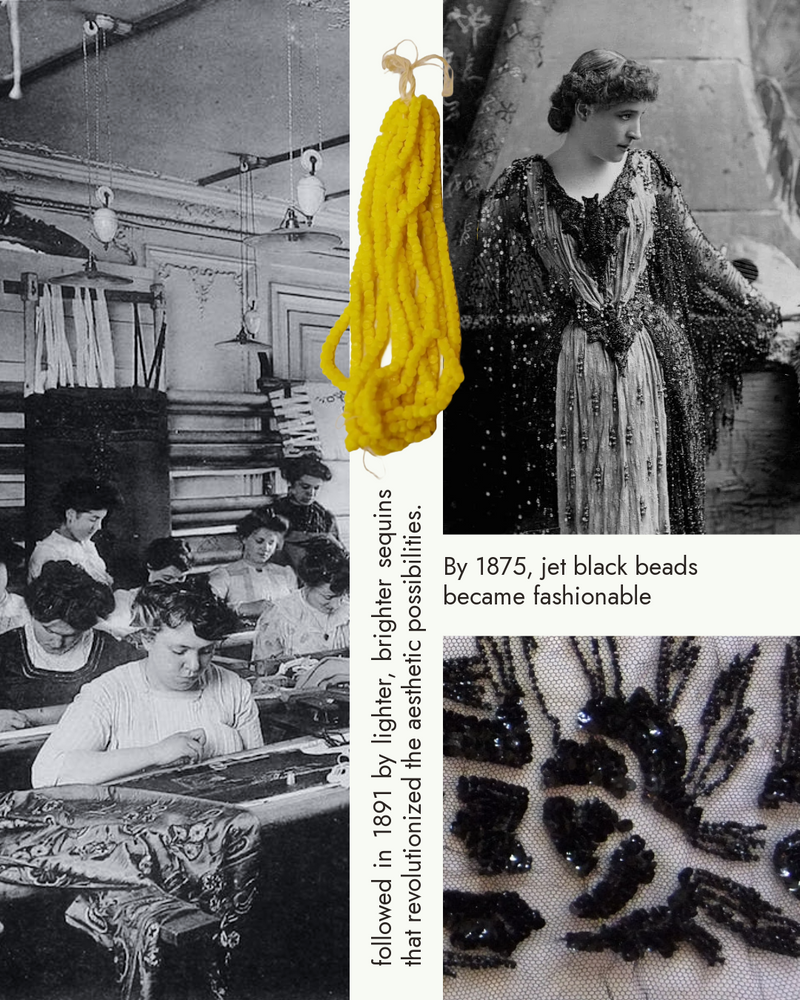
The defining moment in Lunéville embroidery’s history came in 1865, when Louis Ferry-Bonnechaux, the mayor of Lunéville, devised a revolutionary method for beaded and sequined work. Instead of applying beads and sequins one by one, embroiderers began pre‑stringing them onto long hanks and working with the frame upside down, catching each bead into the chain stitch from the reverse. This greatly reduced the physical effort involved in covering whole surfaces with thousands of beads and sequins and created a beautifully even, continuous texture — which is why beads for Lunéville embroidery are still sold pre‑strung today. Embroiderers first used transparent fabrics such as tulle, organza, muslin, and fine silk, which allowed them to see each bead or sequin as it was placed, and as the technique matured they moved on to opaque fabrics, working entirely from the wrong side.
Late 19th century onwards

Luneville Embroidery Today

From the late 19th century, Lunéville’s beaded and sequined embroidery became a hallmark of French evening wear and reached a peak in the 1920s, when glittering, bead‑embroidered dresses helped define the look of modern haute couture. Wars, economic crisis, and changing fashions nearly erased the craft, but from the 1950s onward it found a new life in the hands of Paris couture houses such as Dior and Chanel, where the Lunéville hook and chain stitch remain essential tools. Today, Lunéville embroidery survives thanks to a small number of dedicated ateliers and teachers who continue to pass the technique on, one quiet, repetitive stitch at a time — less about speed, more about the pleasure of the movement.
Everything included
Complete beginners welcome
Ships from London